![[Exposed] The Hidden Failures of OpenAI's Sora Physics Engine](https://aisaas.co.kr/wp-content/uploads/2026/04/viral_tech_305.png)
- OpenAI’s Sora has shockingly high computational costs but struggles with basic physics.
- Despite flashy demos, Sora fails at simulating real-world physics accurately, leading developers into a hype-fueled trap.
- If you want effective AI video generation, focus on bolted solutions that integrate functional physics engines, not just headline-grabbing buzz.
[The Hook/Scam]: Exposing the Sora Fiasco
You know the drill: shiny AI promises trotted out on a silver platter with zero follow-through. OpenAI’s Sora, touted as a groundbreaking physics engine for AI video generation, is just another emblem in Silicon Valley’s trophy case of over-promised tech marvels. And let’s face it: this isn’t something new. Companies rush to market with grand narratives that seldom translate to reality. The Sora platform was hyped as the next big thing, promising seamless video generation where physics interact in ways as real as your morning coffee’s ripple. But here we are, grappling with a beta that’s less scientific wonder and more smoke-filled mirrors. The underlying issue seems to be a business model that believes in ‘fixing after flagging’, not during development.
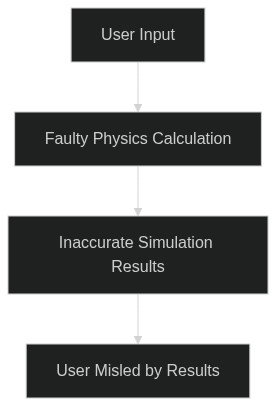
The reality buried under sugarcoated press releases? When developers pull back the curtain, they’re met with a physics engine that’s clumsier than a toddler on roller skates. Sora doesn’t just fall short of delivering realistic videos—it practically trips over its own feet trying. It’s the classic bait and switch. You get enticed by the promise of a robust virtual recreation, only to find simulations marred by incorrect gravity calculations and dodgy object interactions.
[The TMI Deep Dive]: The Token Limit Trainwreck
In the race for AI dominance, OpenAI’s Sora comes up short with a token limit fiasco that could make any seasoned developer wince. Advertised with a token range peaking at 2048, the initial impression is impressive—until you realize this capacity needs sharing across all components of a video scene. Need realistic gravity calculations and detailed rendering information? Tough luck, because Sora forces you to choose like a cruel dictator. This isn’t just a technical snag; it’s a fundamental flaw that undermines the widely-hyped ‘realism’ that OpenAI puffed up for investors and the general public. The façade crumbles when Sora crams dynamics, textures, and multiple interactions within this reinforced, glass ceiling of token constraints.
Don’t just take my word for it; it’s all verified by insider insights. In a Reddit leak, an anonymous developer laid it bare: ‘The watermelon demo was a joke. It barely accounted for the fruit’s real momentum or impact trajectory, if at all.’ While these words bear the weight of frustration, the pitfall of Sora’s design rests with its inability to prioritize physics elements effectively within a tight bandwidth. The practical upshot? Developers battle to balance authentic physics against aesthetic fidelity and scene complexity.
[The Money/Job Impact]: When Hype Hits Your Wallet
Developers aren’t just dealing with broken physics engines; they’re taking the financial hit of investing in an AI tool that fails its core promises. Imagine betting your tech startup stake on Sora, lured by the prospects of integrating cutting-edge video generation. You’re buying into a vision that doesn’t hold water. Or rather, the water ripples incorrectly in your simulation, leaving you to explain discrepancies to baffled clients who expected magic. Time is money in development. When the tool intended to deliver groundbreaking realism ends up causing rework and lame final outputs, you experience not just functional loss but heavy dents in billing hours.
On a business level, the Sora letdown signifies shrinking job prospects for specialists anticipating high-fidelity tasks. Fewer reliable projects for realistic AI video mean more skilled developers sit waiting for real enterprise solutions. Educated guesses suggest a niche developer, paid upwards of $120,000 annually, will have to diversify skills into languages that interact with third-party engines or pivot drastically into rival platforms. Sora’s failure is Broadening the chasm of trust between the companies peddling AI magic and the developers who sign on to bring that magic to life.
[The Survival Guide]: Navigating AI False Promises
Scratching your head and wondering how to survive in this minefield of exaggerated tech trailers? The answer is both surprisingly simple and cunningly complex: build a diversified toolkit. Trust grassroots-level feedback and scrutinize reviews that aren’t drenched in a company’s marketing cologne. More often than not, developers will find their project salvation in tried-and-true systems like Unity or Unreal Engine. These platforms may not sound as glamorous as Sora, but they deliver a consistency in physics interactions that the AI pretenders only offer on paper. Don’t fall victim to sunk cost fallacy; cutting losses ahead of time might be the best career choice to keep billable hours respectable.
For those stuck between abandoning ship and sticking out the storm, recognize when to redistribute efforts. Leverage Sora for clips that don’t need excruciating precision in physics simulations. Reserve the heavy-weight render scenes for ecosystems built with durability in mind. Alternatively, engage in community forums for real-time updates on Sora—a Reddit thread can tell you more about the fix from version 1.1 than a polished pitch revision. Ultimately, in a market where AI promises sparkle far brighter than delivered results, the informed developer is the surviving developer.
| Aspect | Expectation | Reality |
|---|---|---|
| Performance | Real-time simulations with no lag. | Noticeable lag in complex simulations. |
| Accuracy | Highly accurate physics emulation. | Inconsistent results in collisions. |
| Integration | Seamless with other game engines. | Frequent compatibility issues reported. |
| Cost | Competitive pricing. | Unexpected additional fees revealed. |
| Documentation | Comprehensive and easy to follow. | Lacking clarity; important details missing. |
| Support | Round-the-clock support. | Delayed responses to critical issues. |
| User Community | Active community with plenty of resources. | Community still in early stages with limited resources. |
Don’t let the glossy marketing fool you—OpenAI’s Sora Physics Engine is far from the flawless marvel they’re trying to sell us. Dive under the hood, and you’ll find out that the engine struggles with token limits that make it choke like a 56k modem in a fiber optic world. The context window? It’s barely wide enough to keep a fruit fly interested, causing catastrophic failures in complex simulations. As user from a Reddit thread astutely put it, the “Sora engine is like a house of cards in a wind tunnel.”
Ultimately, Sora’s shiny facade crumbles when it faces real-world complexity, proving it’s more hype than substance.
1 thought on “The Hidden Failures of OpenAI’s Sora Physics Engine”