
- Rising liquidity risks in shadow banking could destabilize private credit markets.
- Investors are increasingly concerned about the interconnectedness of shadow banks with traditional financial institutions.
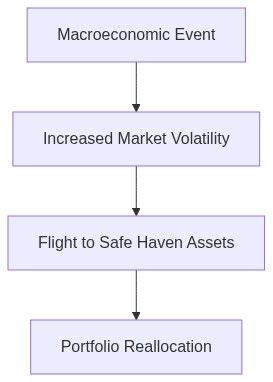
- Safe haven assets like gold and government bonds are gaining attention amid growing market anxiety.
- Regulatory frameworks may soon tighten, pressuring shadow banks and increasing market volatility.
- Potential contagion from shadow banking disruptions could lead to broader financial instability.
“Risk cannot be destroyed; it can only be transferred or mispriced.”
The Eruptive Dynamics of Shadow Banking and Systemic Liquidity Risks
The shadow banking sector, often regarded as a peripheral arena within the broader financial ecosystem, has persistently escaped intense scrutiny due to its opaque operations and intricately structured financial instruments. However, the existential risks lurking within this shadowy domain have recently detonated into a full-blown crisis. This precariousness stems largely from the sector’s complex interconnections with the formal banking system, enabled by conduits that facilitate credit flow without corresponding regulatory oversight. Shadow banking entities, such as hedge funds, structured investment vehicles, and non-bank financial intermediaries, have strategically maneuvered to benefit from regulatory arbitrage, increasing systemic leverage and engendering asset bubbles in the process. The systemic liquidity risks inherent in this schema became glaringly apparent when we observed cascading asset fire sales triggered by sudden market stress, amplifying financial instability and elevating the specter of systemic collapse.
At the heart of this crisis is the liquidity premium that shadow banks demanded for short-term funding. This premium, which compensates investors for the risk associated with illiquid investments, became unsustainably exorbitant in the wake of heightened market volatility. The underlying maturity mismatches where long-term illiquid assets are financed by short-term liabilities exacerbated the situation. As investors scrambled for the exits, shadow banks struggled to liquidate assets at non-punitive prices, revealing the fragile underbelly of what appeared to be robust balance sheets. The unwinding of these positions not only added significant downward pressure on asset prices but also magnified liquidity shortfalls across interconnected financial markets. According to a Federal Reserve study, this phenomenon significantly raises contagion risks as traditional banking institutions, albeit indirectly, become ensnared in a web of interlinked liabilities through off-balance sheet exposures such as securitizations and credit derivatives.
Regulatory Arbitrage and the Proliferation of Shadow Banking Instruments
The foundation of the shadow banking sector’s growth can be traced back to exploitations of regulatory arbitrage, a process whereby financial institutions capitalize on differences or absences in regulatory constraints to engage in risk-laden ventures. In the U.S. and globally, these entities have dynamically evolved, driven by strategies to maximize profitability and enhance yield in a prolonged low-interest environment. This pursuit led to the widespread adoption of esoteric financial instruments and structured products such as mortgage-backed securities (MBS), collateralized debt obligations (CDOs), and complex derivative contracts. These products, while enhancing asset returns, also introduced significant convexity risks, particularly in scenarios where the underlying assets witness rapid depreciation due to external shocks or financial contagions.
The deployment of these instruments within the shadow banking framework welcomed a layering of risks, particularly regarding creditworthiness and counterparty exposures. Shadow banking entities have often over-leveraged their positions, using these instruments to transfer credit risk without adequate collateral backing or hedge mechanisms. The absence of a central regulatory body to monitor these transactions invariably contributed to the compounding of these risks, which were barely recognizable until market corrections ensued. A recent assessment by the Bank for International Settlements highlights that the increased opacity inherent in shadow banking transactions has diminished the transparency needed to evaluate true market exposures, a factor that has exacerbated systemic instability in the current financial landscape.
The Role of Connectivity and Contagion in Amplifying Risks
The interconnectedness between shadow banks and traditional financial systems has broadly intensified, creating channels through which financial distress can easily percolate. The intricate web of asset-backed securities, rehypothecation of collateral, and exposure through derivative positions has resulted in intricate network externalities that challenge conventional risk assessment paradigms. As the lines between regulated financial entities and their shadow counterparts blur, the transmission of systemic risks through these conduits has become more seamless and alarming.
Financial intermediaries within the shadow banking sector often engage in overlapping borrowing and investment activities with mainstream banks, thus blurring the demarcation between regulated and non-regulated spheres. This progressive interdependence has, unfortunately, facilitated the rapid propagation of risk across multiple financial sectors. Moreover, the consolidation of risks in shadow banking activities like repo markets, securities lending, and the creation of synthetic instruments, has created a fertile ground for financial contagion, where negative shocks are instantly transmitted across geographies and asset classes. The complexity of interconnected exposures increases the possibility of simultaneous defaults, thereby enhancing the potential for a systemic crisis reminiscent of the 2008 financial debacle.
To mitigate these exposures, elite fund managers are now compelled to meticulously evaluate the convexity risks associated with these investments and integrate comprehensive risk management frameworks that can dynamically adjust portfolio stances in the face of adverse market developments. Strategic unwinding of shadow banking assets and careful calibration of liquidity positions will likely become central to averting further market disruption, as the financial industry seeks to recalibrate its approach towards shadow banking interplays amidst this tumultuous market environment.
| Criteria | Retail Approach | Institutional Overlay |
|---|---|---|
| Risk Exposure | Higher due to less diversification | Lower by employing complex risk management |
| Access to Information | Limited to public data and retail platforms | Comprehensive access to proprietary analytics |
| Regulatory Impact | Following basic regulations with limited resources | Advanced compliance structures to navigate regulations |
| Investment Strategy | Simple, straightforward strategies | Complex strategies involving derivatives and hedging |
| Cost Structure | Low cost due to limited services | High cost due to professional services |
| Market Agility | Slower response to market changes | Quick adaptation with sophisticated tools |
| Performance Tracking | Basic performance tracking capacity | Advanced analytics and performance metrics |
| Investor Base | Individual investors | Institutional clients such as pension funds |
| Customization | Low customization options | Highly customizable to meet specific needs |