
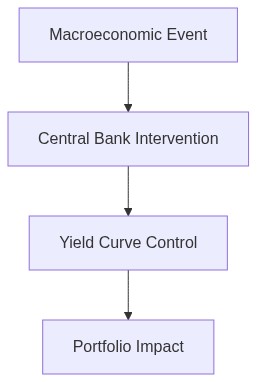
- Algorithmic trading and CTA strategies intensify due to recent YCC policies, creating scenarios ripe for flash crashes.
- AI-driven models struggle with adaptability during unexpected market volatilities, leading to mispricing and rapid drops.
- Historical precedents show flash crashes align with peak algorithmic interactions during central bank policy announcements.
- Increased systemic risks loom as automatic responses from trading algorithms exceed manual intervention capabilities.
- Investors and regulators are urged to reassess dependency on AI in trading strategies amid rising market instability.
“Liquidity is a coward; it disappears at the exact moment you need it most.”
The Hidden Risks Behind AI-Driven Flash Crashes
The Intersection of Liquidity Fragmentation and Computational Velocity
In the evolving landscape of financial markets, the frictionless collision of liquidity fragmentation and the exponentially increasing computational velocity of AI-driven trading systems poses an unprecedented risk. This risk manifests most potently in the form of flash crashes, those ephemeral yet devastating episodes that ripple through markets at breakneck speeds. At the core of this intersection lies a paradox: while AI systems are engineered to optimize efficiency through speed and decision-making precision, the very architecture of their algorithms can inadvertently amplify market turbulence when liquidity becomes severely fragmented.
Liquidity fragmentation itself is rooted in the disparate dispersal of execution venues across global markets, further accentuated by regulations which, although well-intentioned, increase market complexity. AI trading systems, with their propensity for high-frequency trading, exacerbate this fragmentation by executing large volumes of trades across multiple venues simultaneously. This can lead to a scarcity of counterparties able to absorb such volumes, thereby triggering sharp movements in asset prices. The very structure of AI algorithms, noted for their reliance on historical data patterns, may not adequately account for sudden liquidity black holes, thus precipitating price dislocations that cascade through seemingly isolated markets with alarming synchronicity.
Prominent financial institutions have warned of these cascading effects. The Federal Reserve has noted, “The speed and interconnectedness of modern markets mean that a liquidity shock in one area can rapidly transmit to others, magnifying systemic risk and presenting a unique challenge to market stability.” Compounding this risk, the non-linear response of market participants during these episodes—often characterized by heightened aversion behaviors—introduces an additional layer of complexity, similar to the convexity observed in options pricing mechanisms. In this environment, the matter of price discovery shifts from transparency to opacity, undermining the fundamental tenets of efficient market theory and introducing substantial execution risk for fund managers.
Cognitive Biases Embedded in Algorithmic Decision-Making
A paradigm shift in the understanding of flash crashes underscores the significance of not only the algorithms’ quantitative frameworks but also the socio-cognitive biases embedded in their decision-making protocols. These biases, often unseen, reveal themselves in critical market moments, acting as inadvertent catalysts for market disarray. AI models are predicated on historical data which can embed systemic biases reflective of past market behaviors, and in turn perpetuate them. This raises pivotal questions regarding the resilience and adaptability of AI systems when confronted with outlier events that deviate from historical norms.
Algorithmic biases are not new but have gained prominence with the intricate labyrinth of AI systems’ cognitive architectures. These biases may manifest through model overfitting to historical volatilities and underestimation of tail risks. As convexity effects sharpen during extreme market events, there is a pronounced risk of skewness that AI systems might inadvertently exploit or amplify. In the event of a flash crash, this manifests in a vicious feedback loop where AI-driven selling begets further selling, thus exacerbating downward spirals and volatility spikes beyond anticipated levels.
Insights from the Bank for International Settlements (BIS) further elaborate on this phenomenon: “Machine learning systems, while sophisticated in their data processing capabilities, are intrinsically bound by the data sets and parameters they are trained upon. This can result in an over-reliance on historical precedents and simulations that, when tested against unprecedented market conditions, may yield erroneous or harmful outputs.” Therefore, fund managers must grapple with the reality that AI systems, although powerful, are not infallible. Their structured logic could, paradoxically, introduce cognitive dissonance during periods of market stress, elevating both operational and strategic risks.
Regulatory Frameworks and the Implications of Fragmented Oversight
The regulatory environment surrounding AI-driven trading systems remains fragmented, despite efforts to construct a cohesive framework. This presents a potent source of systemic risk within financial markets. The critical challenge lies in reconciling the global nature of financial transactions with the jurisdictionally confined regulatory measures. The laissez-faire oversight historically afforded to algorithmic trading has fostered an environment where technological sophistication outpaces regulatory adaptability, complicating efforts to mitigate the hidden risks of flash crashes.
At the heart of regulatory inadequacy is the struggle to standardize protocols across disconnected markets. This becomes especially worrisome when considering the highly leveraged positions AI systems might inadvertently amplify during a market downturn. Structural gaps in regulation lead to a lack of comprehensive data sharing among jurisdictions, hindering the ability to preemptively address algorithm-induced anomalies. Thus, fund managers are left navigating an opaque landscape where unwarranted regulatory arbitrage might occur, further destabilizing markets through dynamism not efficiently tempered by oversight.
Notably, the asymmetry in supervisory regimes across regions means that fund managers are exposed to disparate rules that draft an incomplete narrative of risk accountability. In the words of the Federal Reserve, “Enhanced regulatory oversight is essential to manage the complexities introduced by high-frequency trading and artificial intelligence. A collective approach is required to harness the benefits while curbing the potential for systemic disruptions.” The regulatory path forward necessitates a vigilant approach, wherein continual policy evolution ensures alignment with technological advancements and contributes to the stability of global financial markets.
Strategic Implications for Elite Fund Managers
The strategic chessboard on which elite fund managers operate has materially shifted with the proliferation of AI engines influencing market dynamics. Their capacity to adeptly navigate flash crashes is contingent upon not merely understanding the mechanics behind AI systems but also anticipating their nuanced impacts on broader market ecosystems. A bifurcated strategy that encompasses both macro-hedging techniques and micro-analysis of AI behavior could offer a robust framework to mitigate the risks and capitalize on the opportunities inherent in AI volatility events.
Fundamentally, convexity management and volatility arbitrage become paramount. Managers must re-evaluate their risk-return profiles in portfolios where AI-driven trading significantly influences price actions. Understanding the liquidity premiums demanded in periods of tightened market conditions extends beyond tactical maneuvers to strategic foresight. This necessitates the development of proprietary models that not only predict but also adapt to market anomalies generated by algorithmic complexities. Furthermore, real-time monitoring systems aligned with predictive analytics provide an essential buffer, enabling managers to respond promptly to emerging threats.
Equally critical is the cultivation of a deep reservoir of market intelligence, wherein strategic partnerships with technology firms and continuous engagement with regulatory developments offer an invaluable edge. Fund managers must champion a culture of adaptability, constantly recalibrating their strategies to reflect the continuously evolving market terrain. This is poignantly articulated by the BIS: “The integration of artificial intelligence into trading operations mandates a holistic approach, balancing innovation with prudence to ensure systemic resilience.” Thus, the future of fund management lies not only in the acquisition of advanced tools but in their judicious application, with an unwavering focus on regulatory foresight and operational agility.
| Criterion | Retail Approach | Institutional Overlay |
|---|---|---|
| Risk Management | Basic stop-loss orders and limited diversification. | Advanced risk management frameworks and comprehensive hedging strategies. |
| Execution Speed | Sufficient for individual trades but may lag in rapidly moving markets. | High-frequency trading capabilities with microsecond execution. |
| Data Utilization | Relies on publicly available data and retail platforms. | Leverages proprietary data analytics and real-time market insights. |
| Algorithm Sophistication | Basic algorithms with limited customizability. | Complex, customizable algorithms tailored to specific market conditions. |
| Market Impact | Minimal impact due to smaller trade volumes. | Potential to significantly influence market through large trades and complex strategies. |
| Regulatory Compliance | Standard retail compliance with less stringent requirements. | Robust compliance frameworks to adhere to strict regulations. |
| Access to Resources | Limited access to financial tools and expert analysis. | Extensive resources including research teams and financial models. |