
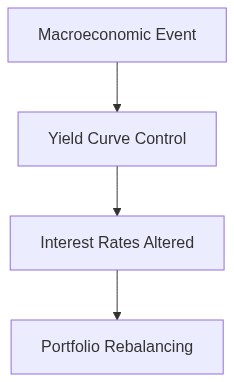
- Yield Curve Control (YCC) by major central banks has distorted bond yields, artificially suppressing interest rates.
- Shadow banks, functioning outside traditional banking regulations, have increased leveraged lending in private credit markets.
- The layered risks within private credit, combined with potential defaults, signal a systemic threat to global financial stability.
- Liquidity strains are compounded by opaque operations and limited oversight in shadow banking activities.
- Institutional investors may face significant exposure and potential write-downs, heightening contagion risks across financial sectors.
“In macro investing, being early is indistinguishable from being wrong.”
Institutional Research Memo: The Imminent Crisis in Private Credit Markets
Decoding the Liquidity Conundrum within Shadow Banking Structures
In recent years, the sphere of private credit markets has expanded at an exponential rate, elevating its hold over the global financial architecture. Nonetheless, this rapid growth has culminated in an intricate liquidity conundrum that harbors potential systemic risk implications. The intricacy arises predominantly from the interplay between shadow banking entities and traditional banking mechanisms, whereby the former operates within a relatively opaque and less-regulated framework. These entities, unencumbered by conventional regulatory praxes, have indulged in high-leverage strategies, exacerbating liquidity mismatches that could precipitate crises similar to those witnessed in more overt financial systems. As shadow banks prolifically extend and securitize private credits, their operations inevitably call into question the overall solvency and liquidity sufficiency amidst market contractions.
The liquidity challenge is further accentuated by “the maturity transformation” undertaken by shadow banks. Converting short-term liabilities into long-term assets inherently generates considerable volatility, especially during periods of market stress. Without the safety nets of the traditional banking system, the susceptibility of these private credit operations to liquidity squeezes is profoundly amplified. Such mismatches are not merely theoretical constructs; they reflect a tangible risk where adverse shifts in market sentiment could induce a cascading effect, eroding investor confidence and impairing liquidity flows. As the Bank for International Settlements recently noted, shadow banks have become pivotal liquidity providers, yet their non-standard operations pose substantial risks BIS Quarterly Review, March 2023.
Compounding these operational liquidity risks is the burgeoning influence of non-bank financial intermediaries (NBFIs). Institutionally imperative yet often understudied, NBFIs have dovetailed as significant players within private credit arenas. Their roles underscore a dualistic engagement—acting both as creditors and investment vehicles—further perpetuating liquidity disparities. While the systemic presence of NBFIs enriches credit avenues, it simultaneously convolutes financial stability pursuits. These entities are notably prone to ‘fire sale’ dynamics during market crises, amplifying systemic vulnerabilities, especially in inadequately capitalized jurisdictions.
Interest Rate Sensitivities and Convexities: A Risk Primer for Private Debt Exposures
As global monetary bodies pivot towards more restrictive interest rate policies, the repercussions for private credit markets can be dire, dictated by intricate interest rate sensitivities and convexities. The delicately poised construct of private credit is intrinsically linked to interest rate trajectories; any misalignment between anticipated and actual rate movements could significantly distort asset valuations and portfolio robustness. Elite fund managers must scrutinize rate exposure and the commensurate convexity implications embedded within their debt instruments, especially as macroeconomic incertitude prevails.
The concept of convexity in this sphere elucidates the non-linear relationship between bond prices and interest rate changes. For private credit, characterized by custom and often illiquid instruments, this convexity can render portfolios susceptible to sharp value deterioration when rates spike unexpectedly. Market viability for these credits depends substantially on the predictability of rate movements; however, the current rate environment has become less predictive and increasingly volatile. As the Federal Reserve undertakes systematic rate hikes to curb inflationary pressures, private credit entities face heightened refinancing risks, potentially spiraling into extended periods of financial instability Federal Reserve Monetary Policy.
These complications are not merely confined to primary rate excesses. The ripple effects extend to the liquidity premium demanded by investors. In an elevated rate environment, the investors’ expectation of higher returns in exchange for assuming liquidity risks intensifies. This expectation fuels an upward repricing of credit risk, thereby exacerbating balance sheet vulnerabilities. Fund managers specifically must navigate the choppy waters of increased convexity-induced volatility and ensure strategic asset allocation that cushions against detrimental rate hikes. Failing to account for these shifts suffices to undermine any gains accrued during periods of rate stability.
Regulatory Scrutiny and Its Potential to Reshape Market Dynamics
As the specter of a private credit market crisis looms ominously, the role of regulatory oversight cannot be overstated. The impending crisis has incited rigorous scrutiny from global financial supervisors, attending to the systemic imperatives posed by extensive non-standard credit operations. Yet, regulatory frameworks remain in constant flux, rendering precise compliance navigation exceptionally challenging for institutions. Incremental reforms, as seen with the Financial Stability Board’s recent guidelines, are designed to mitigate systemic risks, yet their broad implementation may inadvertently aggravate short-term market distress.
The pivotal crux lies in whether regulators can balance prudential safeguards with market fluidity, especially when disparate international jurisdictions are involved. The enforcement of stringent capital requirements and enhanced transparency in reporting metrics presents a dichotomy; such measures could fortify market stability yet impose considerable burdens vis-à-vis operational flexibility and competitive positioning. The current dichotomy is evident within the evolving frameworks of the European Union’s Capital Markets Union initiatives versus the more fragmented U.S. regulatory posture, with each paradigm influencing private credit cost structures and accessibility differently.
Notwithstanding these challenges, the advent of digital regulatory technologies has offered novel mechanisms for compliance facilitation. However, their deployment within the private credit realm remains inchoate, necessitating cautious optimism. While technological integration fosters greater monitoring capabilities, hastened deployments carry risks of exacerbating rather than alleviating market uncertainties. Fund managers must thus monitor evolving regulatory landscapes meticulously, incorporating prudent anticipation of reforms into strategic overhauls and tactical responses, ensuring resilience and compliance in the rapidly evolving credit ecosystem.
| Criteria | Retail Approach | Institutional Overlay |
|---|---|---|
| Investment Strategy | Focus on high-yield retail funds, emphasizing diversification to mitigate risk. | Employs sophisticated risk management tools and bespoke investment strategies, often involving co-investments and strategic partnerships. |
| Risk Management | Primarily relies on diversification and pre-set risk limits; often lacks real-time risk monitoring. | Features comprehensive risk modeling with real-time analytics and stress testing capabilities, tailored to institutional needs. |
| Access to Information | Limited to publicly available data and retail fund manager insights. | Access to proprietary research, industry reports, and exclusive insights from private forums and networks. |
| Liquidity Management | Emphasizes liquidity, with investments in easily tradable securities. | May involve holding illiquid positions with longer horizons, supported by greater capital reserves. |
| Fee Structure | Typically involves straightforward fee structures, such as management fees and performance-based fees. | Complex fee arrangements, potentially involving performance hurdles, tiered management fees, and carried interest. |
| Regulatory Environment | Operate under standard retail financial regulations, with frequent reporting requirements. | Heavily regulated with stringent compliance measures, often involving international regulations. |
| Market Access | Retail participation limits access primarily to public market instruments. | Direct access to a broad array of private market instruments and opportunities through industry networks. |