- Google Trends indicate a surge in interest for ‘commercial real estate,’ signaling increased market scrutiny.
- Algorithmic, CTA-driven trading exacerbates volatility within the commercial real estate sector, triggering flash crashes.
- Institutional investors are forced to reconsider risk management practices due to unpredictable market dynamics.
- The underperformance of key real estate assets reveals deep-rooted liquidity issues and structural weaknesses.
- Regulatory bodies are considering new policies to mitigate risks associated with high-frequency trading in real estate markets.
“Liquidity is a coward; it disappears at the exact moment you need it most.”
Institutional Research Memo: Algorithmic Trading’s Role in Real Estate Shock
The Quantum of Algorithmic Liquidity in Illiquid Real Estate Markets
The intrinsic characteristics of the real estate market have traditionally rendered it relatively illiquid compared to other financial assets. This fundamental illiquidity emanates from the market’s capital intensity, heterogeneous asset nature, and the prolonged transaction processes inherent to real estate. The advent of algorithmic trading, however, has altered these traditional paradigms by introducing new liquidity dynamics into the market. Whereas algorithmic trading once had minimal application due to the tangible, location-specific nature of real estate, its recent infusion is largely attributed to the rise of Real Estate Investment Trusts (REITs) and real estate derivatives, which have transformed real properties into tradeable financial instruments. The liquidity premium traditionally associated with such assets has undergone substantial modulation as algorithms now drive vast quantities of trades, affecting price discovery and asset valuation.
Algorithmic trading operationalizes liquidity provision in real estate markets via high-frequency trading strategies, arbitrage opportunities in REITs correlations, and quantitative models predicting price movements. This has stark implications on market structure and efficiency. The presence of algorithms contributes to a lower bid-ask spread, theoretically enhancing market efficiency. However, in practice, the inherent machine logic driven by predetermined models raises questions about whether this form of liquidity is transient and superficial. In ultra-high-frequency trades within the real estate derivative markets, the convexity associated with rapid price swings may lead to greater systemic instability, as seen during the recent shocks in commercial real estate sectors caused by default cascades in mortgage-backed securities.
A substantial impact of algorithmic trading is on volatility scaling. It implements a new feedback loop wherein automated trading models may augment behavioral herding effects, leading to potential liquidity crunches. Institutions such as the Bank for International Settlements have noted, “Algorithmic trading can exacerbate systemic risk under illiquid conditions, especially in markets historically buffered against high shock amplitudes due to noncomputational participant actions.” These challenges become apparent when asset price corrections trigger algorithmic stop-loss sales, intensifying price swings. Consequently, understanding the depth and permanence of algorithmic liquidity is imperative for fund managers seeking to consider expanding their real estate asset allocations amidst volatility.
Systematic Risk and Volatility Transmission in Global Real Estate via Algorithms
Systematic risk transmission in real estate markets has been profoundly transformed through algorithmic trading architectures operating across borders. Historically, real estate has been perceived as a local market with idiosyncratic risks buffered by geographical and regulatory compartmentalization. However, the systemic integration of market-linked real estate products, primarily engineered into algorithms, has amplified the correlation across geographical boundaries, leading to a propagation mechanism for financial shocks. These algorithms operate by constructing a network of back-tested statistical arbitrage strategies, which are leveraged to manage long-short positions globally, thereby transmitting market volatility from one region to another.
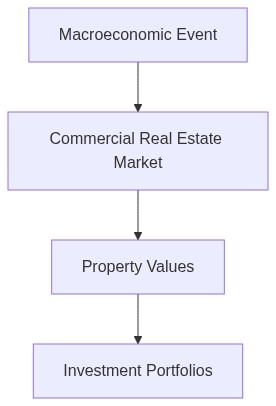
In the context of the recent market shocks, triggered largely by the shifts in interest rate policies and emerging macroeconomic uncertainties, the role of algorithmic trading as a transmission vector of volatility from equity markets to real estate has garnered attention. As the Federal Reserve noted in its report, “The spillover effects of macroeconomic policy shifts are magnified through algorithmic repositioning, with real estate portfolios mimetically realigning with dynamic risk-return profiles established by algorithmic trading models.” This impact is complexified by the fact that real estate assets often have a lagging response time compared to liquid asset classes, thereby leading to a sustained disruption in value realization during macroeconomic adjustments.
Elite fund managers must therefore focus on comprehending these algorithmically-driven correlations, considering them while constructing hedging strategies and determining leverage levels. Moreover, the increment in systematic risks signifies a pressing need for robust risk management frameworks that can accommodate the latent risks posed by the algorithmic undermining of traditional shock-buffering mechanisms. This requisite knowledge serves to buffer portfolios against algorithmic-induced stress and equips managers with a strategic edge for optimizing capital allocations in the turbulent post-shock real estate environment.
Convexity Dilemmas and Portfolio Optimization in the Algorithm-Driven Era
Convexity, a concept frequently intrinsic to fixed income securities, has gained relevance in the real estate sector as algorithmic trading strategies increasingly introduce measures of non-linearity in the price-response mechanism of real estate derivatives. The infusion of algorithms into market operations implies that real estate assets now exhibit heightened sensitivity to interest rate changes and other economic variables, which have induced significant convexity effects. These effects manifest prominently in decision-making related to automated buy-sell decisions—decisions executed based on algorithmically derived demand-supply equations that diverge sharply from human intuition.
From a portfolio optimization perspective, adapting to this new landscape involves reconciling the curvilinear performance trajectory of real estate assets with traditional linear expectations. Algorithms prioritize convexity exploitation, often executing trades that accentuate short gamma exposures. These trading strategies can create amplified de-correlation episodes between expected cash flow stability of property assets and their market valuation volatility, leading to a mispricing scenario that can either present lucrative arbitrage opportunities or catastrophic valuation traps. Elite Fund Managers need to integrate these non-linear volatility measures in their quantitative models to drive decision-making efficiency.
Furthermore, strategic foresight is necessary to manage real-estate-oriented algorithmically-triggered perturbations. This requires a recalibration of risk assessment models that frequently employ stress-testing frameworks incorporating scenarios that accurately simulate high-convexity environments. The explicit awareness of convexity intricacies allows fund managers to discern the likely trajectory of asset performance under varying market conditions and ensures resilience against algorithm-driven market distortions. Ultimately, the capacity to preemptively manage these convex algorithmic consequences determines the robustness of future real estate portfolio performance amidst algorithmic influences.
| Criteria | Retail Approach | Institutional Overlay |
|---|---|---|
| Capital Allocation | Limited capital, often individual investor funds | Substantial capital, pooled institutional funds |
| Risk Management | Basic risk controls, often manual adjustments | Advanced risk management tools, robust frameworks |
| Strategy Complexity | Simpler strategies, often rule-based | Complex strategies, involving machine learning and AI |
| Execution Speed | Slower, often relying on third-party platforms | High-frequency trading capabilities |
| Data Utilization | Limited data sets, possibly outdated | Comprehensive data analysis, real-time data feeds |
| Market Impact | Less influence on market dynamics | Significant market impact due to large order volumes |
| Regulatory Compliance | Basic compliance, individual responsibility | Strict compliance, with dedicated legal teams |
| Access to Technology | Limited access to advanced trading technology | Access to cutting-edge technology and infrastructure |
| Scalability | Challenging to scale strategies | Easier scalability due to resources and infrastructure |