
- Rising geopolitical tensions have prompted companies to re-shore their supply chains, increasing demand for domestic industrial spaces.
- Commercial real estate prices are inflating as companies compete for limited property in strategic locations.
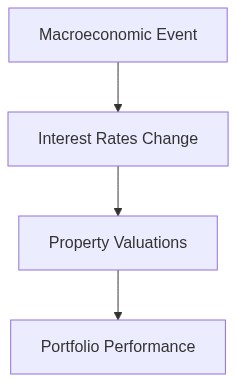
- Interest rate hikes are compounding financial pressures, reducing the profitability of new developments.
- Office space demand is waning due to remote work trends, causing misalignments in asset valuations.
- Investors are underestimating the systemic risk posed by inflated asset bubbles in urban centers.
“Liquidity is a coward; it disappears at the exact moment you need it most.”
The Hidden Crisis in Commercial Real Estate
Shifting Demand Dynamics: The Seismic Shift Underpinning Valuations
As we navigate the complexities of the post-pandemic economic landscape, the commercial real estate (CRE) sector is grappling with profound demand dynamics catalyzed by hybrid work regimes and shifting consumer behaviors. These paradigmatic changes have precipitated an asymmetric impact on asset valuations across different CRE subclasses. Specifically, office and retail spaces, historically perceived as stalwarts of commercial portfolios, face unprecedented headwinds as urban migration patterns and digital transformation drive a contraction in demand. The perspicacity of fund managers is now invariably tied to their ability to discern the underlying nuances dictating asset-specific risk and return profiles. The intricacies of pricing these assets have become increasingly opaque, grounded not only in current income streams but future expectations underpinned by the transitory phase of work-from-home models—an uncertainty that exacerbates volatility and compresses yield spreads.
Valuation frameworks are consequently undergoing recalibration, with cap rates sensitive to exogenous shocks such as interest rate hikes and inflationary pressures—elements that shift the convexity and duration characteristics of property portfolios. The corollary is an uptick in the risk premium demanded by investors to bear the uncertainty intrinsic to CRE assets. This liquidity premium is further accentuated by the varying levels of resilience exhibited by assets across geographic and sectoral lines. Moreover, the bifurcation in the capital market’s response underscores the entrenched dichotomies within the real estate investment constraints, posing a dilemma for fund managers optimizing risk-adjusted returns. One eminent study by the Bank for International Settlements noted, “The heterogeneity in demand function and investment returns highlights the indispensable need for tailored valuation models and hedging strategies.” BIS
Critically, the crowding out of traditional investors into alternative assets such as industrial and logistics properties further catalyzes this distortion in capital allocation and asset pricing. Given the relative inelasticity of supply in these sectors, the fundamentals are substantially driven by the multiplier effects of e-commerce and technological adaptation. Nevertheless, volatility in demand—triggered by geopolitical risks and policy shifts—could precipitously alter these trajectories, necessitating strategic hedging maneuvers to mitigate downside risk. Thus, the latent contagion risk harbored within these asset classes cannot be overstated, necessitating enhanced vigilance and robust scenario analysis frameworks among fund managers dedicated to CRE investment.
The Implicit Vulnerabilities: Debt Structuring and Cash Flow Asymmetries
Debt structuring in commercial real estate is a double-edged sword, offering leverage that can enhance returns but also susceptibility to market fluctuations and interest rate exposure. In today’s landscape, the structure of CRE debt carries implicit vulnerabilities particularly concentrated around the variable-rate loan segments, where interest rate volatility can precipitate cash flow mismatches and refinancing challenges. The growing practice of incorporating mezzanine financing and structured debt instruments exacerbates the complexity, imbuing portfolios with layered risks tied to the broader oscillations in capital markets.
The fundamental concern stems from the convexity inherent in these debt instruments, which perturbs cash flow stability as rate cycles turn. With the Federal Reserve’s tightening monetary policy echoing the recent inflationary tremors, short-dated liabilities have been thrust into the limelight. As one report from the Federal Reserve delineates, “The escalation in interest rates impinges on the liquidity and refinancing capabilities of many CRE investors, potentially leading to distressed asset sales.” Federal Reserve This scenario necessitates a recalibration of portfolio strategies with a particular emphasis on duration management and interest rate hedge-effectiveness as critical elements in navigating the prevailing economic milieu.
Moreover, the cash flow asymmetries created by varying lease structures and tenant solvency further compound the intricacies of the debt landscape. The allocation of capital expenditure across repair, maintenance, and tenant improvement factors influences the capitulation in net operating incomes (NOI), suggesting an inherent convexity risk being assumed by investors. As variances in tenant creditworthiness and occupancy rates manifest, they necessitate proactive monitoring and adaptation in securing an optimal weighted average cost of capital (WACC). Consequently, the dynamic interplay between rate movements, tenant solvency, and property operating cycles defines the delicate balance fund managers must maintain to neutralize adverse effects and sustain yield generation.
Regulatory Overhang: A Complicated Web of Compliance and Future Outlook
The commercial real estate sector remains intricately beckoned by regulatory overlays shaped through fiscal policies and sustainability mandates. These regulatory interventions, though aimed at reinforcing market stability and transparency, escalate operational complexity and impose substantive compliance costs on CRE stakeholders. Emerging regulations predominantly anchored on climate risk reporting and sustainable building certifications frame an evolving legal landscape that poses operational challenges and compliance-related uncertainties. This nexus of regulatory requirements introduces convexity in operational strategies as fund managers grapple with achieving compliance without compromising on cost efficiencies and competitive positioning in the market.
Within this context, jurisdictions globally are instituting environmental, social, and governance (ESG) benchmarks that necessitate forward-thinking adaptation strategies. The shift towards non-carbon reliant real estate frameworks, while beneficial in mitigating long-term environmental risks, places short-term burdens on liquidity positions, engaging strategic alignment with institutional investors tweaked towards green financing avenues. The imposed sustainability reporting mechanisms not only foster transparency but also reshape market perception on long-term asset viability, cultivating a differentiated landscape for capital deployment. According to the United Nations Environment Programme Finance Initiative, “The integration of sustainability considerations into real estate portfolios fosters resilience, yet necessitates recalibration of existing paradigms.” UNEP FI
Additionally, geopolitical policies surrounding foreign investment restrictions and tax reforms embed layers of complexity, particularly affecting cross-border investment flows and valuations. The regulatory mores associated with repatriation strategies and taxation arbitrage call for sophisticated asset maneuvers and tax efficiency techniques amongst elite fund managers. This regulatory conundrum necessitates preemptive strategic adjustments in portfolio rebalancing efforts, delineating the nuanced trajectory of expected returns amidst the compounded effects of regulatory scrutiny and market oscillations.
| Criteria | Retail Approach | Institutional Overlay |
|---|---|---|
| Investment Horizon | Short to Medium Term | Long Term |
| Risk Tolerance | Moderate to High | Low to Moderate |
| Capital Requirements | Lower | Higher |
| Diversification | Limited | Broad |
| Access to Information | Public Access | Professional Networks |
| Market Impact | Minimal Influence | Significant Influence |
| Transaction Costs | Higher Relative Percentage | Lower Relative Percentage |
| Opportunities for Arbitrage | Limited | Advanced |
| Liquidity | Higher Liquidity Needs | Lower Liquidity Needs |
| Typical Instruments Used | REITs, Retail Funds | Direct Property Investments, Institutional Funds |
| Regulatory Environment | Retail Regulations | Institutional Regulations |
| Execution Speed | Quick Execution | Slower Execution |
| Potential for Innovation | Limited | High |
| Tax Considerations | Standard Retail Taxation | Complex Tax Strategies |
Portfolio managers should reassess exposure to commercial real estate, especially in major metropolitan areas, due to declining occupancy rates and decreased property valuations. Consider reallocating resources towards sectors that benefit from remote work trends and demonstrate resilience in the current economic climate. Evaluate and potentially reduce holdings in CMBS, as increased delinquency rates signify elevated risk. Stay vigilant for further market shifts and prioritize investments with strong fundamentals and stable performance indicators.”