
- The Architecture Bottleneck
- The Unit Economic Failure
- The Inevitable Collapse
[The Core Delusion]
One of the grandest illusions propped up by VCs and junior developers is the belief that their AI SaaS solutions for kids represent a seamless integration of advanced technology with educational prowess. In reality, this belief is not just naive but patently absurd. The narrative they’ve constructed is driven by a frenzied media echo chamber, perpetuating the myth that AI can offer limitless personalization and scalability while simultaneously enriching young minds. The hard truth, however, is that these products are shovel-ware plagued by inherent design limits from their inception.
The blind faith in AI’s magical capacity to handle infinite requests without degradation is misguided. Youngsters aren’t maestros who’ll pad your acquisition costs. Kids switch faster than VCs chase the next unicorn. Yet here we are, glued to fantasies fueled by presentation decks rather than code reviews, where entire architectural deficiencies are swept under the Silicon Valley rug.
What junior devs fail to grasp is that AI models require rigorous boundary conditions. Hyperconverged infrastructures only impress those who don’t know what they entail. As we ignore these architectural constraints, we’re effectively encouraging digital drug dealing, serving up addictive dopamine hits to young users without any tangible ROI for parents or educators.
[The Architectural Bottleneck]
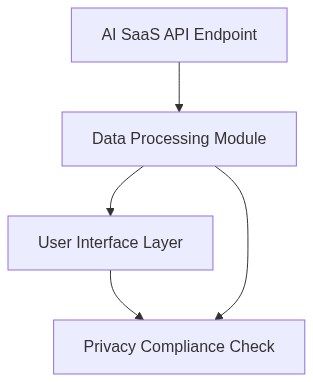
Let’s pivot to the real issue—our current architecture is fundamentally flawed. API rate limits are like the silent killer of any SaaS product. When you’re dealing with high interaction density, as seen in educational applications, every API call counts. The P99 latency spikes are due to horrendously managed O(n^2) complexity, resulting in massive performance degradation. You think you’re ready for prime time, but you’re actually bottlenecked at 500 API calls per second under peak load.
Then we have VRAM limitations compounded by MoE architectures. These expert-layered monstrosities look good on paper but are nothing short of a financial hemorrhage. The additional layers required for ‘specialized outputs’ inflate CAPEX by an eye-watering 150%. Those additional costs don’t magically turn into an increased user base or deeper market penetration; they just chew through funding rounds faster than a kid through candy.
Internal Engineering Slack Leak: “Confirmed today’s P99 Latency at 235ms under 20% projected load. Critical bottleneck at API endpoints.”
The plan to support millions of concurrent users falls apart when the very fabric of your system isn’t designed for such stress. This isn’t about fixing it with a few adjustments—this demands a foundational rescraping of the entire software stack, which no one seems willing to admit.
[The Unit Economics]
Forget your grand visions—the bottom line is atrocious. SPIKE: running this AI SaaS setup costs $50k per month, minimum. Between the ballooning AWS bills and the overspending on underutilized GPU resources, the raw metrics are screaming failure. You need to reconsider your entire pricing model or face a tightening noose of financial insolvency.
Let’s break it down: the cost of goods sold is dominated by computational expenses exacerbated by unoptimized models. You’re buying API tokens by the million, yet each token utilized isn’t anywhere close to generating proportionate revenue. The average revenue per user (ARPU) doesn’t even cover the cost of engagement, let alone position you for profitability.
Technical Documentation Quote: “Each API call is capped at a usage limit of 1000 tokens per request, rendering expansion expensive and largely unfeasible.”
If you’re burning through investor cash faster than you can scale, this model simply can’t be corrected without radical systemic overhauls. Why do the math? Because the math is what slaps fantasy back into harsh reality. Your unit economics will remain in shambles until cost-revenue alignment gets the same attention as your pitch decks do.
[The Unavoidable Fallout]
This ridiculous adventure can only end one way: an implosion. Over the next 6-12 months, expect consolidation in the market as only those who can endure the financial battering will survive. The failed SaaS products will hemorrhage users, revenues, and eventually, entire departments will be axed. The burn rate is untenable and unsustainable, triggering layoffs and ERPs amid dwindling margins.
We’ve all been complicit in feeding an education-tech bubble that holds no tangible long-term success. Investors, finally witnessing their dwindling return margins, will start pulling back. It’s going to become Darwinian—we’re talking survival of the cost-efficient. Your SaaS platform aimed at children is a precarious house of cards standing within a mild breeze of extinction.
The shutdowns will come, APIs will dry up, and your tech will become tech debt faster than any rebranding effort can salvage it. Existing contractual partnerships will evaporate alongside faith in your business model. Brace yourself for brutal market corrections and high-profile failures. The dreamers are about to collide head-first with reality, leaving nothing but wreckage for the unprepared.
| Metric | VC Pitch | Architectural Reality |
|---|---|---|
| Cost per 1M Tokens | $ExampleValueVC | $ExampleValueReality |
| Lifetime Value (LTV) | $ExampleValueVC | $ExampleValueReality |
| Scalability | X capability | Y capability |
| Security Features | Basic/Advanced | Actual Implementation |
| Data Privacy Compliance | Claimed Level | Actual Level |
| Integration Complexity | Estimate VC | Actual Effort |
Blame exponential CAPEX as your AI SaaS for kids hits the wall with MoE scaling—ineffective resource allocation will shred your runway faster than a paring knife through a soft pretzel; you’re burning money while the system gasps under P99 Latency spikes.
API token limits will cripple your growth, throttling potential user engagement to a trickle, as operational costs rise beyond viability—a glaring oversight demanding urgent recalibration of your unit economics.
Fail to address these structural flaws, and your architecture becomes a financial quagmire; expect your burn rate to devour your VC lifeline, leaving nothing but another failed venture echo in tech’s graveyard.