
- Central banks are implementing quantitative tightening, leading to reduced liquidity in financial markets.
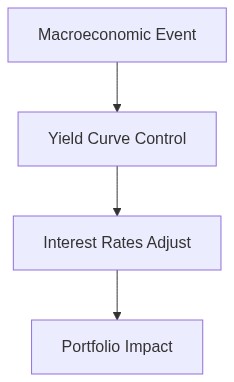
- Yield curve control policies are being re-evaluated, contributing to a natural rise in long-term interest rates.
- Investors are adjusting portfolios in response to higher sovereign debt yield expectations.
- The shift is affecting global bond markets, potentially increasing the cost of government borrowing.
- Watch for increased volatility as markets react to central bank policy changes.
“In macro investing, being early is indistinguishable from being wrong.”
The Stealth Surge of Sovereign Bond Yields
Deciphering the Emerging Dynamics of Sovereign Bond Markets
In recent months, a myriad of factors has conspired to subtly inflate sovereign bond yields, creating a peculiarly volatile yet opaque landscape. The traditionally placid bond market has been shaken by tectonic shifts in global economic policy and geopolitical tensions, warranting a closer analysis for elite fund managers aiming to navigate this financial topography adeptly. Sovereign bond yields, those nominal interest rates on government bonds, have witnessed an unheralded escalation in response to a confluence of economic disruptions and inflationary precursors. This unexpected surge, or ‘stealth surge’ as it aptly deserves to be coined, could be attributed in large part to the renewed expectations of major monetary policy realignments in anticipation of persistent inflationary pressure, a phenomenon not entirely captured by traditional forward rate agreements or yield curve anticipations.
The increased volatility in sovereign bond yields can be characterized by a marked increase in interest rate sensitivity, with a noted shift in bond convexity that fund managers must account for. Convexity, essentially the curvature of the price-yield relationship, is no longer just a concern in high-yield corporate debts but is pivoting into sovereign issues as well. As larger movements in yields transpire, particularly in the Eurozone and North American sectors, portfolio duration strategies might require recalibration, given the amplified sensitivity to market yield changes over the typical linear approximation. Such exigencies are compounded by the recent alterations in liquidity premiums demanded by the market, reflecting a broader reassessment of the geopolitical risks and fiscal policy unpredictability. The nuanced behavior of these premiums underscores an implicit re-pricing of sovereign risk, fortified by a depreciating trust in the consistent economic stewardship of a handful of key industrial nations.
It’s paramount for fund managers to contextualize this stealth surge within the broader contango and backwardation dynamics observed in derivative markets. While traditionally the term structures of sovereign debt have been a picture of stability, the recent inversion seen in some term structures could herald deeper systemic vulnerabilities within the global economic fabric. Specifically, negative carry trades are exhibiting a heightened frequency, suggesting systemic expectations of yield curve erosion as both a prevailing threat and an opportunity. At the heart of this systemic shift is a reconceptualization of the fundamental anchoring role central banks play. As elevated inflationary expectations unsettle real investor returns—formerly tethered to stable yield predictability—the global financial elite must reassess their forward rate models and risk-adjusted return paradigms accordingly. The Federal Reserve’s recent meeting minutes emphasize a focal point: “Persistent inflationary forces, characterized by both entrenched supply chain disruptions and resilient consumer demand, have necessitated a recalibration of asset purchase tapering schedules” (Federal Reserve).
The Interplay of Central Bank Policy Trajectories and Yield Dynamics
Central banks worldwide, historically the pillars of monetary policy stability and predictability, are now at the helm of a monumental recalibration of their strategic roadmaps. In this era of the stealth surge, their policies are increasingly becoming a double-edged sword, with the potential to either stabilize jittery markets or exacerbate existing yield volatilities. With inflation outstripping target rates in significant economies, central banks are implicated in an intricate dance of balancing rate hikes with economic growth sustainability. This necessitates a meticulous analysis of the path dependency of rate changes and the resulting convexities within the yield curves. In this unique liquidity environment, the disentanglement of core inflation drivers versus transient shocks stands as the principal conundrum facing policymakers and, by extension, market participants.
The recent hawkish tilting of central banks delineates an implicit acknowledgment of entrenched inflationary pressures necessitating more aggressive monetary interventions. This nuanced shift in policy stance signifies an underlying recalibration of the natural interest rate—the real rate consistent with full economic potential and price stability—an element eloquently captured in the Bank for International Settlements’ annual report: “The recalibration of neutral rates is envisaging an altered economic trajectory prompting more agile policy frameworks” (BIS).
As sovereign yields adjust to these evolving monetary landscapes, the premium for holding longer-duration assets has witnessed a significant shift. The resultant instability, as reflected in derivative markets—especially swaps and futures—demands a profound reappraisal amongst fund managers of their position-weighted risk models. The term structure of interest rate derivatives highlights emergent contango in longer-dated maturities, a signal of future anticipated rate increases. This places portfolio managers at a strategic crossroad, weighing the prospects of capitalizing on short-term yield compressions versus adopting a defensive stance against upward yield volatility.
Geopolitical Imperatives and Their Impact on Sovereign Risk Assessment
With geopolitical fault lines deepening, the calculus of sovereign risk has undergone significant metamorphosis. These macroeconomic perturbations necessitate a re-evaluation of the sovereign bond market’s ostensibly stable underpinnings. Fund managers must now allocate assets with an astute awareness of the plausible divergences in sovereign bond yields, spurred by escalating global geopolitical tensions. In particular, the queasiness surrounding post-pandemic recovery narratives, alongside strained international relations, has precipitated an uncanny latitudinal diversification in bond spreads.
The conscious unbundling of sovereign risk from perceived macroeconomic stability has introduced a novel variable into the yield valuation matrix. The Ukrainian conflict and its global ramifications have compounded investor caution, leading to a premium on bonds issued by economies less entangled in the geopolitical melee. Similarly, the decoupling of some emerging markets from traditional economic alliances has fostered idiosyncratic yield behaviors, requiring comprehensive locale-specific risk assessments.
A fascinating shift has emerged in sovereign credit default swaps (CDS) markets, previously a bellwether for systemic sovereign risk. The basis spreads on CDS have exhibited exacerbated volatility, hinting at a reevaluation of underlying credit stressors and potential sovereign replication dynamics. Where previously hedge funds and sophisticated investors viewed sovereign CDSs as hedging instruments against fiscal profligacy, they now potentially offer arbitrage opportunities or speculative gain, albeit with nuanced risk exposures. This reiteration of sovereign fundamentals, echoing economic regionalism and diplomatic recalibrations, invites fund managers to revisit traditional sovereign risk frameworks.
| Aspect | Retail Approach | Institutional Overlay |
|---|---|---|
| Target Audience | Individual investors | Institutional investors |
| Investment Vehicle | Mutual funds, ETFs | Customizable portfolios, direct bond investment |
| Risk Management | Basic risk assessment tools | Advanced risk modeling and hedging strategies |
| Research and Analysis | General market trends and data | In-depth quantitative analysis and forecasts |
| Trade Execution | Standard brokerage platforms | Access to over-the-counter markets and trading desks |
| Cost Structure | Higher expense ratios due to limited economies of scale | Lower cost per transaction due to greater scale and direct access |
| Liquidity Management | Limited options with priority on quick access | Diverse funding sources and liquidity planning |
| Regulatory Considerations | Adherence to retail investor protection regulations | Comprehensive compliance with institutional guidelines |
| Performance Measurement | Benchmark against popular indices | Customized performance metrics and benchmarks |
| Advisory and Support Services | Access to basic customer support and financial advisor services | Dedicated relationship managers and specialized advisory services |
In light of the substantial increase in sovereign bond yields across major markets, it is advisable for portfolio managers (PMs) to overweight their positions in sectors and asset classes that benefit from rising interest rates. As yields climb, fixed income securities that are less sensitive to interest rate changes, such as shorter-duration bonds, should be considered to mitigate potential losses. Additionally, PMs should look at equities in financial sectors, especially banks and insurance companies, which typically see improved margins with higher rates. Keep an eye on inflation-linked bonds, as they can provide a hedge against inflation risks. Regularly assess portfolio duration and adjust allocations according to rate movements to manage risk effectively.”
1 thought on “**The Stealth Surge of Sovereign Bond Yields**”