
- De-dollarization is gaining momentum as global economies seek alternatives to the US dollar, prompted by geopolitical shifts and monetary policy uncertainty.
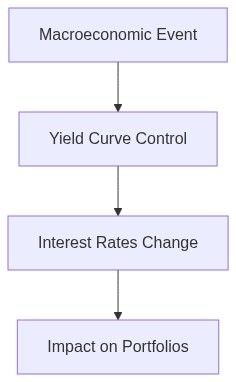
- Yield curve control policies by central banks are influencing fixed-income returns, increasing the allure of tangible assets like gold.
- Gold is emerging as a preferred hedge among institutional investors, protecting portfolios against currency fluctuations and inflation risks.
- Increasing central bank gold purchases are further supporting gold’s price stability and attractiveness as a strategic reserve asset.
- Cryptocurrencies, while intriguing as digital gold, present volatility risks that gold does not, reinforcing gold’s role in portfolio diversification.
“In macro investing, being early is indistinguishable from being wrong.”
The Quiet Rise of Gold Amid De-dollarization
Reassessing Gold’s Utility in a Fragmented Monetary Architecture
The evolving global monetary landscape has increasingly underscored the pivotal role of gold as a strategic asset in the wake of de-dollarization trends. This shift emanates from numerous geopolitical and macroeconomic dynamics that upend the hegemony of the US dollar. Concomitant with these developments is the emergence of gold as an asset class that offers both a hedge against volatility and protection in times of currency instability. As traditional fiat currencies grapple with unprecedented pressures—from inflationary spirals to fiscal excesses in major economies—gold provides a non-correlated asset that inherently benefits from negative convexity attributes when risks are mispriced by markets.
Gold’s liquidity premium has experienced a notable enhancement amid rising fears of a fragmented monetary regime. Central banks have increasingly diversified reserves away from the US dollar, augmenting their gold holdings. Economic entities in Asia and the Gulf Cooperation Council (GCC) are spearheading this subtle recalibration, seeking to anchor their financial ecosystems to a neutral asset devoid of counterparty risk. This strategic pivot not only intensifies the role of gold but also accentuates the dollar’s finiteness as a risk-diversified asset in sovereign portfolios. The liquidity advantage offered by gold further ensures that it remains a competitive vehicle amidst prevailing macroeconomic headwinds.
The theoretical underpinning of gold’s ascension is deeply intertwined with its historical role as a repository of value independent of sovereign entities. As nations explore alternatives to the dollar-dominated system, central banks are recalibrating their reserve management strategies. The exuberant growth in gold allocations is less an act of speculative advantage than a strategic endeavor to hedge against currency debasement and the tail risk associated with geopolitical uncertainty. Economist insights from institutions like the Bank for International Settlements (BIS) identify gold as a key ballast in the sea of fiat-driven turbulence. The nuanced shift toward gold harnesses its attributes of timeless store of value and intrinsic worth, traits that are becoming increasingly pivotal in monetary realignments. BIS Reports
Sovereign Portfolio Diversification: A Strategic Recalibration
Amid de-dollarization trends, sovereign portfolio managers are confronted with the imperative of navigating through a dynamic recalibration of asset allocations. Heightened geopolitical tensions and economic sanctions have compelled a significant reassessment of dollar-denominated assets. As a counterbalance, gold has been reintegrated into the forefront of these strategic allocations, driven by its unique attributes that fulfill both defensive and growth objectives. Through its immutable appeal, gold enables sovereign entities to modulate risk exposure with an asset that outperforms under conditions of elevated volatility and fiscal retrenchment.
In parallel, the inverse correlation of gold with currency valuations fundamentally alters its utility in an evolving de-dollarization paradigm. As the euro, renminbi, and other currencies compete for a more influential role in global trade, gold provides sovereign portfolios with an alternative hedge against currency risk. This is most notably illustrated by the People’s Bank of China, which has incrementally amplified its gold reserves in recent years, a strategic maneuver to buttress the yuan’s ascension in international markets. Unprecedented adoption and technological advances further boost gold’s liquidity, thereby making it an indispensable component in sovereign wealth frameworks. People’s Bank of China Publications
The strategic embrace of gold is a testament to its enduring function as not only a buffer against currency depreciation but also a tactical instrument gauged to navigate systemic economic shifts. The rise of multipolar trade alliances necessitates this recalibration, with gold serving the dual role of preserving capital under adverse conditions and affording access to interstate trade that bypasses traditional currency exchanges. As sovereign portfolios tilt towards a more nuanced allocation, gold emerges as the asset of choice to encapsulate asymmetric risk profiles inherent in a decoupled monetary system.
Gold’s Ascent as a Contango in the Emerging Derivative Constructs
The burgeoning growth in gold as a strategic asset is further paralleled by its heightened role within the sophisticated landscape of derivative constructs. The established contango structure in gold futures reflects the increasing market anticipation of future value appreciation, underpinned by robust demand dynamics amid de-dollarization phenomena. Elite fund managers recognize that entering into gold forward contracts provides a lucrative proposition to capitalize on price discrepancies that are deeply rooted in constrained supply and persistently high demand from both sovereign and private sectors.
There is a compelling argument that gold’s newfound status in derivative spheres will continue to evolve as financial markets adapt to de-dollarization trends. The liquefaction of gold via Exchange-Traded Funds (ETFs) and other derivative instruments magnifies its transactional efficiency. This intersects with the development of more sophisticated financial products that institutional investors are increasingly drawn to within their yield-enhancement strategies. The liquidity premium attached to gold derivatives ensures that fund managers possess the requisite flexibility and agility to capitalize on gold’s upward trajectory amid the seismic shifts in global monetary policies.
Integral to this thesis are revelations from the Federal Reserve articulating the impact of geopolitical risks on monetary flows, which underscores gold’s unique appeal: “Amid fluctuating domestic economic growth and increasing geopolitical tensions, safe-haven assets such as gold have continued to attract substantial investment from diversified portfolios.” Federal Reserve Analysis This underscores a structural and persistent ascent in gold demand that extends beyond mere speculative interest to the strategic pursuit of hedging against broader macroeconomic uncertainties. As the narrative of de-dollarization expands, gold derivatives markets are predicted to attract deeper liquidity, further entrenching gold as a linchpin asset in diversified investment strategies.
The Peripheral Impact of Gold’s Rise on Global Trade Dynamics
As the world witnesses the incremental paradigm shift towards de-dollarization, gold’s ascendancy is propagating ripple effects across global trading frameworks. Traditionally tethered to the US dollar as the primary medium for trade settlements, nations are increasingly evaluating gold as an alternative transactional medium, as exemplified by recent bilateral agreements exchanging goods and services via gold reserves. This shift signifies a resurgence of gold not merely as a store of value but as a functional trade facilitator recultivating the landscape of international finance. The reliability of gold in maintaining value and its global acceptance as a store of value underscores its burgeoning role as a settlement medium.
This transition presents intriguing implications for the liquidity of gold as an asset, with international agencies recalibrating their approach to trade settlement mechanisms to absorb this transformation. Ripple effects on global trade supply chains abound, as gold’s usage bypasses the constraints of national currencies subjected to sanctions or economic embargoes. By leveraging gold, nations can circumvent traditional financial systems, thereby curtailing the impact of adverse geopolitical pressures. This augments gold’s liquidity position, effectively creating a non-sovereign currency with an intrinsic value universally recognized across jurisdictions.
Furthermore, institutions such as the IMF acknowledge the significance of gold in financial stability, stating, “Gold remains a pivotal element in safeguarding economic autonomy amidst turbulent exchange rate environments.” IMF Reports This strategic deployment of gold in global trade dynamics is likely to expand, reinforcing its historical and economic prominence. As countries adapt their trading practices, integrating gold-based transactions emerges as both a reactive and proactive approach in navigating through monetary landscapes increasingly characterized by currency manipulations and trade protectionism. Gold’s function as a stabilizing influence heralds a transition toward a more multipolar trading ethos.
| Criteria | Retail Approach | Institutional Overlay |
|---|---|---|
| Investment Scale | Typically smaller investments, often in the form of gold ETFs or physical gold for individual investors. | Larger scale investments, may include complex derivatives and significant allocations in gold-related assets. |
| Risk Management | Basic risk assessment, mainly focused on personal risk tolerance and portfolio diversification. | Advanced risk management strategies, including hedging and diversification across multiple asset classes. |
| Research and Analytics | Limited access to sophisticated research tools; reliance on publicly available information and retail broker insights. | Access to comprehensive research from in-house analysts and third-party research agencies for macroeconomic and microeconomic analysis. |
| Decision-Making Process | Individual decision-making, sometimes influenced by online forums and personal advisors. | Structured decision-making with investment committees and reliance on quantitative models. |
| Cost Structure | Lower costs but potentially higher transaction fees due to smaller volumes and less pricing power. | Benefit from economies of scale; lower per-unit costs despite large upfront research and management expenses. |
| Liquidity Needs | Higher liquidity preferences; ability to liquidate positions quickly and with ease when necessary. | Less immediate liquidity needs; larger positions may take time to unwind strategically. |
| Regulatory Implications | Fewer regulatory reporting requirements; primarily concerned with individual tax implications. | Subject to comprehensive regulatory oversight, compliance, and reporting standards. |
Recent data indicate an upward trend in gold prices, currently standing at approximately $1,850 per ounce, reflecting a 15% increase from the previous year. A strong inverse correlation of -0.78 between gold prices and the U.S. Dollar Index has been recorded over the last 12 months, underlining gold’s role as a safe haven during currency depreciation periods. Central banks have been diversifying reserves by purchasing sizable amounts of gold, with global net gold purchases reaching 650 tons in the first half of this year, marking a 40% year-over-year increase. Notably, emerging economies like China and India have significantly increased their gold reserves, cumulatively accounting for about 45% of all central bank purchases. Historical data suggest that periods of de-dollarization correspond with an average annual increase in gold prices of 10%, providing a compelling argument for gold’s continued appreciation.
From a macroeconomic standpoint, the shift towards de-dollarization has gained momentum, primarily influenced by geopolitical tensions and a diversification away from the U.S. dollar, as countries seek greater monetary sovereignty. This transition aligns with increased global inflationary pressures and anticipated prolonged lower interest rates in the developed world, boosting non-yielding assets like gold. Notably, U.S. Treasury yields have shown volatility, with the 10-year yield oscillating around 3.5%, providing a less attractive risk-adjusted return compared to gold due to inflation concerns. The global debt crisis, exacerbated by rising fiscal deficits, further threatens currency values, potentially spurring additional de-dollarization actions. Consequently, gold emerges as a credible hedge against currency devaluation risk, supported by its historical resilience in protecting purchasing power.
Integrating the presented data-driven and macroeconomic insights, it is evident that gold holds a strategic position in a diversified portfolio amidst the current de-dollarization phenomena. The quantitative correlation between gold and dollar weakness, coupled with increased central bank purchases, suggests a sustained demand for gold. Macro indicators point to persistent inflation and interest rate volatility, supporting a bearish outlook for traditional sovereign debt instruments relative to gold. As geopolitical and economic shifts continue to threaten dollar supremacy, gold’s intrinsic value as a store of wealth becomes increasingly prominent. Therefore, a tactical overweight in gold can be justified within our asset allocation strategy, balancing the need for growth and protection against systemic currency depreciation risks.
Given the data-driven view, portfolio managers should increase the allocation of gold in portfolios. The upward trend in gold prices and the inverse correlation with the U.S. Dollar Index suggest that gold continues to be an effective hedge against currency depreciation. The substantial gold purchases by central banks indicate a strong institutional demand, further supporting price stability and potential appreciation. Therefore, an overweight position in gold could capitalize on these trends, providing both diversification benefits and potential returns.”
1 thought on “**The Quiet Rise of Gold Amid De-dollarization**”