
- Japan’s central bank signals potential relaxation of Yield Curve Control, causing concern over rising bond yields.
- Geopolitical fragmentation and re-shoring drive inflation, increasing the pressure on central banks globally.
- Investors fear Japan’s policy shifts could lead to spillover effects in global bond markets, exacerbating volatility.
- The convergence of monetary policy adjustments and global supply chain restructuring drives complex risk scenarios.
- Elite funds are closely monitoring Japan as a bellwether for broader reactions to rising global inflation pressures.
“The market is a mechanism for transferring wealth from the impatient to the prepared.”
Why Investors Cannot Ignore Japan’s Bond Armageddon
The Yen Carry Trade Reversal: A Catalyst for Volatility
In the realms of global finance, the yen carry trade has long epitomized a hallmark strategy for investors seeking to exploit disparate interest rate environments. The core of this trade involves borrowing in yen at Japan’s historically low interest rates to invest in higher-yielding assets abroad. However, the misalignment born from this arbitrage has laid the groundwork for its own undoing. The assumed stability of this tactic began wobbling as the Bank of Japan (BoJ) signaled shifts towards a more hawkish stance, igniting a reversal fraught with systemic risk. The liquidity premium previously associated with yen-funded positions has experienced a recalibration, collapsing as investors unwound positions en masse, seeking refuge amid swelling yen valuations.
This profound shift pressures a marked repricing of risk, as the burgeoning yield curves across the globe attract renewed scrutiny under the lens of elevated convexity. The volatility harbored by this paradigm shift has effectively dismantled the traditionally benign curves observed in Japan’s sovereign debt markets. Institutional investors with sprawling portfolios heavily weighted towards Japanese assets encounter an upheaval as convexity accentuates both the magnification of risks and potential capital erosion. The risks associated with this are further intensified by herd behavior. As noted by the Bank for International Settlements, such collective movements precipitate liquidity vacuums, compelling a liquidity crunch that compounds the inherent risks of the carry trade’s mass unwinding.
The aftermath of this dissolution strains global markets, as heightened yen valuations disrupt currency pegs and challenge the comparative advantage Japan’s low-rate environment traditionally fostered. The geoeconomic implications manifest beyond mere nominal value adjustments. Herein, we witness a domino effect wherein yen strength breeds implications for cross-border trade balances, impacting import-dependent nations heavily intertwined with Japan’s industrial output. Thus, the carry trade reversal catalyzes a broader reflection on underlying fiscal paradigms and potential policy recalibrations, demanding astute strategic pivots from elite fund managers who seek to hedge their exposure in an era distinguished by unparalleled volatility.
Unyielding Sovereign Debt and the Implications for Global Yield Curves
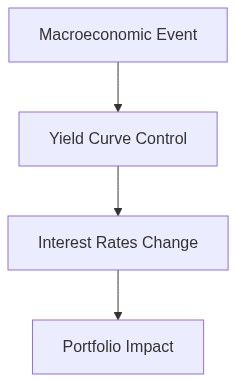
Within the intricate web of global finance, Japan’s sovereign debt encapsulates a multifaceted narrative of persistence and anomaly. Japan’s public sector indebtedness stands at the precipice of exacerbating systemic fissures, casting shadows over the yields entangling the instruments globally. As structural reform lags behind ambitious fiscal stimulus, the probability of altering debt-to-GDP ratios appears increasingly remote. The Japanese government bond (JGB) arena, heretofore anchored by the BoJ’s quantitative easing mantle, now navigates a precarious trajectory. The BoJ’s telegraphed intent to augment its yield curve control framework, heightening longer-end yields, reverberates through both domestic and international markets.
The concept of a flat yield curve unravels under this reorientation, rendering it untenable within Japan’s debt instruments, causing ripple effects across global yield curves. As the Federal Reserve observes, markets across the Atlantic discern consequential ramifications stemming from Japan’s sovereign yields spiking, offering competitive carry trade prospects vis-à-vis traditionally low-risk United States Treasuries. Consequently, the cost of capital predictions adjust as comparative valuations shift, leaving international portfolios susceptible to unanticipated duration risk impacts. As investors grapple with heightened risk premiums attached to JGBs, the imperative for diversifying away from low-yield stabilization mechanisms becomes apparent.
Privy to the undercurrents driving yield disparities, elite fund managers must also navigate a confluence of factors influencing global strategies. The resultant push-pull dynamic within yield curves propels scenarios where borrowing costs amplify, juxtaposed against central banks’ dual mandates of curbing inflation whilst fostering economic growth. Such a dynamic begets an environment ripe for contango dislocations, driving a need for nimble hedging strategies that counterbalance the looming risks associated with Japan-centric portfolios. Senior management must contemplate strategic shifts, simultaneously safeguarding investor assets while embracing transformative opportunities born from the potential realignment of global capital flows.
Macroprudential Concerns: Financial Stability in an Era of Transition
The shifts within Japan’s bond markets resonate deeply across the financial system’s architecture, necessitating thorough scrutiny from policymakers and institutional investors alike. Historically, Japan’s economic paradigms provided a bulwark of stability and predictability. Yet, this Bond Armageddon scenario spotlights the precarious terrain of navigating transitions seamlessly while maintaining macroprudential oversight. As the BoJ navigates a potential recalibration of its monetary policies amidst sustained inflationary pressures, questions arise surrounding the resulting perturbations across asset valuations and the inherent systemic risks.
The entrenchment of Japan’s bond volatilities in global financial systems underscores the criticality of liquidity provisions and systemic resilience. Heightened price fluctuations beckon concerns over the adequacy of capital buffers maintained by financial institutions bearing significant JGB exposures. Critically, the cascading risks inherently embedded in these exposures foment fraught narratives surrounding contingent liquidity stresses within the banking sector. As articulated by the Bank for International Settlements, the convoluted web of cross-institutional dependencies fosters a breeding ground for financial contagion, destined to test the robustness of macroprudential frameworks across leading financial centers (BIS Quarterly Review, March 2023).
Moreover, the broader implications for market participants entail grappling with the repositioning of asset allocations in alignment with evolving scenarios, particularly where regulatory recalibrations impact strategic decision-making. The balancing act confronting fund managers revolves around deciphering potential sources of systemic risks while seizing upon reallocation opportunities that align with revised regulatory environments. As Japan’s bond Armageddon approaches, the urgency surrounding craftily counteracting market dislocations marries imperative macroprudential considerations with innovative investment strategies, poised to redefine the contours of financial stability in the ensuing epoch.
| Criteria | Retail Approach | Institutional Overlay |
|---|---|---|
| Objective | Preserve capital with moderate growth potential. | Maximize return with strategic asset allocation and risk management. |
| Risk Tolerance | Moderate to low, focusing on stable returns. | Higher risk tolerance, leveraging hedging techniques. |
| Decision-Making Process | Individual investors’ discretion, often influenced by market trends. | Systematic approach with in-depth analysis and forecasting. |
| Strategy Flexibility | May experience limited flexibility due to personal constraints. | Highly flexible, with the ability to quickly adjust to market changes. |
| Resource Allocation | Limited resources with a focus on a few asset classes. | Extensive resources, allowing for diversified asset allocation. |
| Investment Horizon | Typically medium to long-term, aligning with personal goals. | Long-term, driven by strategic organizational objectives. |
| Market Analysis | Relies on readily available market information and news. | Utilizes proprietary models and in-depth market research. |
| Impact of Japan’s Bond Market | Potentially high impact due to limited diversification. | Managed impact through diversified portfolios and hedging strategies. |
| Response to Market Volatility | Might react slower due to limited market access. | Proactive adjustments and risk management strategies in place. |
| Performance Metrics | Focus on absolute return and safety of capital. | Emphasis on risk-adjusted returns and benchmark performance. |
The quantitative outlook for Japan’s bond market reveals a precarious situation that investors cannot afford to ignore. Japanese Government Bond (JGB) yields have experienced volatility with the 10-year JGB yield recently hovering around multi-year highs. The Bank of Japan’s (BoJ) yield curve control policy has been tested as inflationary pressures push rates upward. Trading volumes in JGBs have surged, indicating heightened market stress. This increased activity in both the spot and futures markets has been accompanied by rising implied volatility, signifying concerns over potential future shifts. Data shows that foreign investors have increased their net selling of JGBs, further exacerbating the sell-off pressure. A historic correlation between JGB yields and global bond yields suggests continued spillover risks, potentially affecting portfolios with exposure to either the yen or Japanese financial instruments.
From a macroeconomic standpoint, Japan’s bond market represents a critical pressure point for both domestic and global financial stability. Persistent deflationary forces are being challenged by recent inflation spikes, testing the limits of the BoJ’s accommodative policies. The BoJ’s balance sheet has grown significantly, increasing the vulnerability of the Japanese financial system to shifts in investor sentiment. The demographic challenges in Japan, including a rapidly aging population, further strain public finances, making potential fiscal reforms urgent. A change in the BoJ’s policy stance or a shift in inflation expectations could lead to a sharper-than-expected rise in yields, causing considerable turmoil in the bond market. The interconnectedness of global financial markets means that volatility in JGBs could induce broader market instability, affecting interest rate expectations and portfolio allocations worldwide.
The convergence of quantitative signals and macroeconomic indicators underscores the necessity for investors to closely monitor developments in Japan’s bond market. The heightened volatility and potential for policy shifts carry substantial implications for global asset allocations. The evolving situation in Japan should serve as a critical consideration in our risk management strategies and portfolio diversification approaches. While the quantitative trends highlight immediate market stresses, the macro perspective emphasizes longer-term structural risks that could destabilize not just Japan’s economy but also reverberate through global financial markets. As a committee, we should consider strategic adjustments to manage exposure risks while also exploring opportunities that this evolving bond market narrative might present. Ignoring Japan’s bond market dynamics at this juncture could lead to unmitigated risks in our overall portfolio performance.
2 thoughts on “**Why Investors Cannot Ignore Japan’s Bond Armageddon**”