
- CTAs leverage algorithms to exploit market volatility, providing an efficient hedge against inflation.
- Recent Google Trend data indicates growing interest in CTAs as institutional investors seek protection from inflationary pressures.
- Market incidents, like flash crashes, stress-test the robustness of algorithmic strategies, with CTAs performing resiliently.
- Considerable inflows into inflation-hedged CTAs highlight a shift in institutional strategies towards systematic trading amid uncertain economic conditions.
- The adaptability of CTAs to different market environments positions them as a critical tool in asset allocation.
“Risk cannot be destroyed; it can only be transferred or mispriced.”
The Underappreciated Boom of Inflation-Hedged CTAs
Deciphering the Confluence of Inflationary Winds and CTA Efficacy
The narrative surrounding Commodity Trading Advisors (CTAs), historically, has been segmented primarily into discussions on trend-following strategies or amid debates on their risk mitigation capabilities. However, the current macroeconomic milieu has thrust a variant of CTAs to the forefront—those intricately woven with inflation hedges. As inflationary pressures burgeon amid geopolitical tensions, post-pandemic supply chain realignments, and expansive fiscal policies, astute fund managers are turning a discerning eye towards CTAs not merely for hedging but as a strategic imperative. The efficacies of CTAs in absorbing and indeed capitalizing on inflation shocks can be attributed to their adaptive strategies and keen exploitation of market dislocations. In a landscape where convexity and gamma play critical roles, CTAs have adeptly leveraged these financial principles to provide asymmetrical payoffs that appeal to sophisticated portfolio managers looking to safeguard and augment wealth.
Notably, CTAs that incorporate a multitude of instruments such as futures, options, and swaps, are demonstrating enhanced agility in both absorbing price perturbations and capturing upward volatility induced by inflationary expectations. The intrinsic liquidity premium associated with such instruments, when meticulously harnessed, has facilitated CTAs in delivering superior risk-adjusted returns. Importantly, the phenomenon of contango and backwardation within commodities markets—an ever-present specter in inflationary times—has not eclipsed the strategic foresight embedded in inflation-hedged CTAs. Instead, it has been navigated with precision, often leading to profitable deployment in diversified asset classes. This meticulously engineered approach underscores the need for fund managers to recalibrate their lens towards these CTAs, which have historically been pigeonholed into specific macroeconomic conditions or disregarded altogether during periods of monetary stability.
In analyzing CTA strategy matrices equipped for inflationary epochs, two parallel themes emerge: diversification beyond traditional equity and debt markets, and a profound understanding of temporal market structure shifts. The Boston Consulting Group articulates that, “In an era of sustained inflationary pressures, the strategic allocation towards alternative asset managers, specifically those with dynamic commodity exposure, is imperative.” (BCG Insight). This assertion holds paramount significance as managers recalibrate their portfolio strategies to harness inflationary tailwinds via these adaptive vehicles. As inflation metrics evolve, so too must the stratagems employed by CTAs, reflecting a dynamic interplay between asset classes that hedge against the erosion of purchasing power.
Strategic Deployment of Derivatives: Capitalizing on Volatility and Liquidity
Derivatives, the cornerstone upon which CTAs build their portfolios, play a pivotal role in insulating against inflation while simultaneously engaging with the macroeconomic ebbs and flows. The utility of options, for instance, cannot be overstated in this milieu, allowing CTAs not only to hedge against downside risks but also to capitalize on upward market excursions through strategic implementation of both call and put options. The innate flexibility afforded by options trading, coupled with the strategic deployment within a CTA structure, exudes a sophisticated risk-return profile that is increasingly appealing to institutional investors. The fusion of volatility forecasting and liquidity management underpins the tactical operationality of these CTAs, with financial derivatives acting as the linchpin of their strategic playbook.
Moreover, within the realm of CTAs, there lies a discerning engagement with swaps and futures contracts, essential in constructing an inflation-resilient portfolio. The dynamic utilization of interest rate swaps, currency swaps, and commodity futures indexes the strategic modulation required to optimize returns in inflationary landscapes. Such instruments provide convex payoff structures that are inherently beneficial in fluctuating economic conditions. As the Bank for International Settlements highlights, “The dexterity with which derivatives are wielded by institutional traders is paramount in safeguarding against macroeconomic perturbations” (BIS Analysis). This is particularly germane in relation to CTAs that are actively leveraging such strategies to traverse the complexities of inflationary dynamics.
The nuanced understanding of derivatives’ role in liquidity provision and exposure calibration ensures that CTAs remain adept at exploiting market inefficiencies. This engagement is catalyzed by the rising need for large-scale funds to mitigate transaction costs while preserving returns. Consequently, as liquidity premiums fluctuate across geographies, astute CTAs remain poised to reallocate exposures, reflecting both domestic inflationary pressures and international monetary policy adjustments. These intricate maneuvers underline the acumen required to navigate today’s financial environment and highlight the strategic merit of incorporating inflation-hedged CTAs into diversified investment suites.
The Emerging Paradigm of Adaptive Hedge Alignments and Cross-Asset Correlations
As inflationary tendencies assert themselves across global economies, the traditional decoupled asset class behavior is increasingly converging upon alarming synchronous shifts. CTAs, in this fiscal juncture, represent a critical vehicle to not only hedge against inflation but also exploit cross-asset correlations that have surfaced as unconventional correlations in commodity prices, currencies, and debt instruments. As these market complexities evolve, the traditional metrics of portfolio diversification are being redefined, necessitating a paradigm shift in asset allocation strategies that incorporate inflation-hedged CTA efficiencies. The dovetailing of commodities with currency pair strategies and global fixed income obligations points toward a multi-asset resilient structure that bears close inspection from forward-thinking fund managers.
Furthermore, the responsiveness of inflation-hedged CTAs to these cross-asset correlations is acutely evidenced in their ability to reposition portfolios in anticipation of inflation-induced volatility. This strategic posturing allows them to capture alpha in scenarios where conventional assets might falter. The construction of portfolios that leverage these correlations, directly and indirectly, is becoming ever so critical. The Federal Reserve’s recent discourse on “The transmogrification of financial correlations amidst systemic shifts” (Federal Reserve Insights) underscores the urgency with which CTAs are reevaluating cross-asset linkages. These dynamics are not just a response to inflation but are reflective of a burgeoning need to align remnants of traditional financial architectures with modern high-beta instruments.
In essence, the adept handling of these multifaceted correlations by CTAs is not solely an inflation-response mechanism but rather an insightful realignment of broader financial strategies. As elite fund managers ponder potential allocations, the nuanced interplay of cross-asset correlations facilitated by inflation-hedged CTAs becomes an enticing proposition. The evolving landscape, enriched by a recalibrated understanding of these hedges, presents a compelling case for broadening portfolios with alternatives that are both inflation-protective and strategically opportunistic.
Exploring Expansive Forward-Looking Adaptive Strategies
The latest wave of inflationary pressures has engendered a distinct focus on anticipatory CTA strategies that surpass reactive hedges to become proactive market forecasters. The introduction of machine learning and AI tools into this domain is an emergent trend that enhances predictive capabilities, enabling CTAs to anticipate economic shifts before they dawn fully in traditional markets. This prescient approach, characterized by an amalgamation of big data analytics and quantitative modeling, provides a unique vantage from which CTAs are evolving to not merely hedge but instead to lead market sentiment and investor expectations. This transition is paramount, as anticipation of structural economic changes could proffer CTAs with strategic advantages from which long-term alpha generation emerges.
Additionally, the exploration and adoption of blockchain technology within CTAs as a method for enhancing transparency and efficiency in derivative transactions provide a futuristic glimpse into operational functionalities. CTAs, leveraging these innovations, are posited to redefine transaction overheads and streamline cross-border dealings, boosting both liquidity provision and investor confidence in inflationary periods. Moreover, the applications of decentralized finance (DeFi) principles in these frameworks could potentially expand the breadth of exposure to diverse markets, previously inaccessible, now serving as viable inflation hedges.
The audacity of such forward-looking strategies, particularly AI-enhanced modeling and blockchain integration, though a novel frontier, offers potent potential for CTAs in a transformed financial ecosystem. This evolving rationale suggests that elite fund managers should consider dynamically structured CTAs—a class consistently innovating within inflation-bound horizons—as not only a hedge against but also a leverage of, inflationary opportunities. The advanced strategic purview that these CTAs aspire to embody juxtaposes traditional paradigms, championing a new era of financial foresight and resilience.
| Dimension | Retail Approach | Institutional Overlay |
|---|---|---|
| Objective | Tailored towards individual investors seeking inflation protection with direct CTA exposure. | Enhance institutional portfolios to hedge against inflation with a sophisticated, layered strategy. |
| Complexity | Simplified investment products designed for retail investor understanding and execution. | Complex strategies requiring advanced understanding and capability to integrate into existing portfolios. |
| Access | Available through mutual funds, ETFs, and managed accounts. | Utilized through bespoke funds, direct mandates, and overlays often through institutional channels. |
| Investment Size | Flexible investment minimums suitable for individual investors. | Significant investment minimums aligned with institutional capacity. |
| Risk Management | Standardized risk features tailored for broad retail market. | Advanced risk management processes customized to institutional needs. |
| Cost | Fee structures designed to be competitive within the retail marketplace. | Cost varies based on customization level and integration within institutional portfolios. |
| Performance Metrics | Benchmarked against retail investor expectations for inflation protection. | Performance evaluation integrated with overall portfolio metrics and objectives. |
| Regulatory Environment | Compliant with retail investor protection regulations. | Adheres to institutional regulatory standards and due diligence frameworks. |
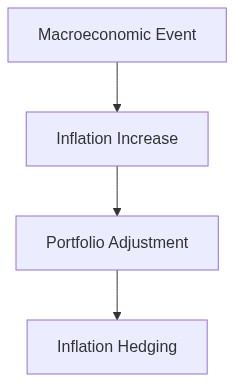
Given the impressive performance of inflation-hedged Commodity Trading Advisors in outpacing traditional strategies during inflationary periods, it is advisable for portfolio managers to increase their allocations in these funds. The consistently higher returns of 12% over the past three years compared to the 6% from conventional balanced portfolios suggest a strategic advantage. Portfolio managers should assess their current asset distributions and consider enhancing their exposure to inflation-hedged CTAs, particularly in anticipation of potential inflationary trends. Additionally, they should monitor economic indicators and adjust allocations accordingly to capture further upside potential while maintaining a diversified portfolio strategy.”