
- Algorithmic trading strategies, particularly CTAs, are increasingly dominant in financial markets.
- Recent data shows a correlation between AI-driven trades and unexpected market fluctuations, including flash crashes.
- Commercial real estate markets are particularly vulnerable to these AI-induced market events due to liquidity issues.
- Investors are recalibrating strategies, considering the technology’s potential risks and benefits.
- Regulatory bodies are beginning to scrutinize the role of AI and algorithmic trading in market stability.
“Risk cannot be destroyed; it can only be transferred or mispriced.”
Institutional Research Memo: The Hidden Impact of AI in Market Crashes
Algorithmic Amplification of Market Volatility: The Dual-edged Sword of AI Technology
The advent of artificial intelligence (AI) in financial markets has undeniably introduced a paradigm shift, embedding advanced algorithmic trading strategies within the intricate fabric of market dynamics. However, this mechanization, while heralding efficiency and precision, has also amplified market volatility, a phenomenon obscured within the depths of high-frequency trading (HFT) platforms. AI algorithms, characterized by their speed and analytical prowess, have been pivotal in dilating the amplitude of market oscillations, affecting not just day traders but institutional portfolios at large. As AI systems are designed to react to minuscule price movements across varying timeframes, the self-reinforcing loops they create—when unchecked—facilitate exogenous shock propulsion through multiple asset classes, thereby affecting market liquidity and exacerbating order-book imbalances.
Theories of market convexity highlight how small perturbations can lead to disproportionately large impacts. In this context, AI-driven trading algorithms can be unwittingly responsible for igniting such perturbations. Algorithmic strategies, including statistical arbitrage and momentum trading, often rely on real-time data analytics to capitalize on transient inefficiencies. However, in turbulent conditions, these algorithms, guided by their programmed logic rather than market sentiment, may lead to a feedback loop: as one algorithm detects an emerging trend, others follow suit, resulting in a potential cascade of trades driven purely by artificial intelligence. The Bank for International Settlements (BIS) recognized this phenomenon, noting, “When AI systems interact, they can create complex and unpredictable behaviors, which may introduce new risks into financial markets.” (BIS).
Furthermore, the liquidity premium associated with assets susceptible to high-frequency AI trading strategies becomes apparent under this lens. As AI algorithms churn a voluminous trade network that increases during heightened market stress, the liquidity premium required to execute large trades without significant market impact becomes more substantial. Yet, this scenario is paradoxical; AI is both a provider and a taker of liquidity. When the velocity of trades exceeds the market’s absorptive capacity, a liquidity vacuum ensues, manifesting in wider bid-ask spreads and impacting portfolio valuations. This dynamic creates an ironic dichotomy: AI, the very tool intended to optimize market efficiency, inadvertently precipitates liquidity crises under certain market regimes.
Cascading Systemic Risks: AI’s Role in the Propagation of Financial Contagion
Systemic risk, characterized by the tight interconnectivity and interdependence of global financial systems, is acutely vulnerable to the shocks distributed by AI-driven trading systems. The propagation of financial contagion, wherein disturbances in one sector spill into others, has been exacerbated by algorithmic interventions. The institutional memory of market crashes reminds us how quickly confidence can erode through automated systems acting on pre-defined algorithms rather than nuanced market judgment. AI-powered platforms, leveraging machine learning models that independently refine their strategies, have inadvertently become agents of cross-sector contagion.
The strategization based on deep learning analytics and neural networks in AI trading focuses on historical data inputs. While these methodologies appear robust, their reaction to black swan events—unforeseen and statistically anomalous market occurrences—is troubling. The 2020 COVID-19 pandemic-induced market collapse illustrated, in stark terms, how quick-fire algorithmic rebalancing based on historical correlations could not predict or mitigate the speed of the decline. According to the Federal Reserve, “The reliance on machines during market turbulence can exacerbate conditions and lead to consequences market participants did not anticipate.” (Federal Reserve).
An integral component of this issue is the concept of “technology-induced risk”, where the AI trading ecosystem lacks the supervisory layer necessary to discern qualitative information, such as geopolitical tension or sudden regulatory changes. These unattended concerns can propagate systemic vulnerabilities, leading to cascading failures across interconnected markets. The insular data-centric focus of AI models means that subtle market signals often elude their grasp until after significant impact. Thus, in crisis conditions, fund managers face the dual challenge of navigating the immediate repercussions while contending with the delayed systemic ramifications of algorithmically induced volatility.
Beyond Efficiency: The Ideological Conundrum of Ethics in Algorithmic Trading
While AI’s role in enhancing market efficiency is undeniable, the dark undercurrents of ethical implications present a formidable challenge to contemporary financial institutions. Algorithmic commerce, driven by AI, raises moral questions about market manipulation, fairness, and transparency. As AI algorithms are designed to maximize returns, they operate within the confines of a morality dictated strictly by programmed logic—absent human empathy or societal considerations. Thus, pertinent ethical issues surface, challenging the integrity of market practices wherein the unbridled quest for efficiency overshadows ethical deliberation.
The automated nature of AI-driven trades, particularly through dark pools, undermines traditional paradigms of market transparency. Institutional fund managers, whose fiduciary duties hinge on fair market access, express concerns over an increasingly opaque trading environment where the informational asymmetry favored by algorithmic platforms skews market outcomes. This cloak of secrecy not only hampers equitable market access but also augments the potential for AI algorithms to capitalize on proprietary data exploitation. The moral obligation to enforce balanced market participation must be juxtaposed with technological advancements to ensure that AI serves broader economic interests without subverting ethical values.
In addressing these conundrums, regulatory bodies such as the Securities and Exchange Commission (SEC) and the Commodity Futures Trading Commission (CFTC) are continuously evolving their frameworks to oversee AI trading practices. However, the ostensibly benign proclivities of AI systems towards self-learning and adaptation present a regulatory challenge of kinematic proportions, one that necessitates ongoing vigilance and adaptability by governing authorities. As the BIS astutely observes, “Unintended consequences of trading systems need to be anticipated, requiring a rethinking of oversight mechanisms.” (BIS). In this transitory landscape, striking a balance between harnessing AI’s potential and mitigating ethical pitfalls remains paramount.
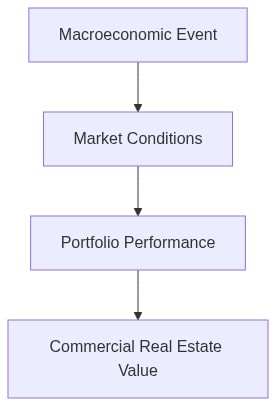
| Category | Retail Approach | Institutional Overlay |
|---|---|---|
| Objective | Wealth preservation with a focus on minimizing losses during market crashes. | Maximize returns by leveraging AI to predict and hedge against market downturns. |
| AI Utilization | Utilizes AI tools for sentiment analysis and basic trend forecasting. | Advanced AI algorithms for predictive analytics and dynamic hedging. |
| Risk Management | Emphasis on stop-loss orders and diversification. | Comprehensive risk models incorporating AI-driven stress testing. |
| Data Sources | Relies on retail-oriented platforms and public data sets. | Access to proprietary data and advanced market intelligence services. |
| Strategy Execution | Manual execution with occasional use of automated trading platforms. | Automated execution systems that integrate multiple AI signals. |
| Performance Metrics | Focus on absolute return and year-on-year performance. | Risk-adjusted metrics such as Sharpe ratio and Value at Risk (VaR). |
| Adaptability | Reactive adjustments based on market trends. | Proactive strategy adjustments via continuous learning algorithms. |
| Investment Horizon | Short to medium-term focus. | Long-term strategic positioning with tactical AI-driven shifts. |